CI Setup
Setting up CI early is one of the best things you can do for your project. The /twd:ci-setup skill automates the entire process — from detecting your project configuration to generating GitHub Actions workflows.
Why Set Up CI Early
The longer you wait to add CI, the harder it gets. Tests that pass locally but fail in CI often reveal:
- Missing environment variables
- Hardcoded ports or paths
- Dependencies that aren't properly declared
Setting up CI right after your first tests means you catch these issues before they compound.
Running the Skill
/twd:ci-setupJust like /twd:setup, this skill starts with a discovery phase. It detects your project configuration and asks whether you want to include code coverage:
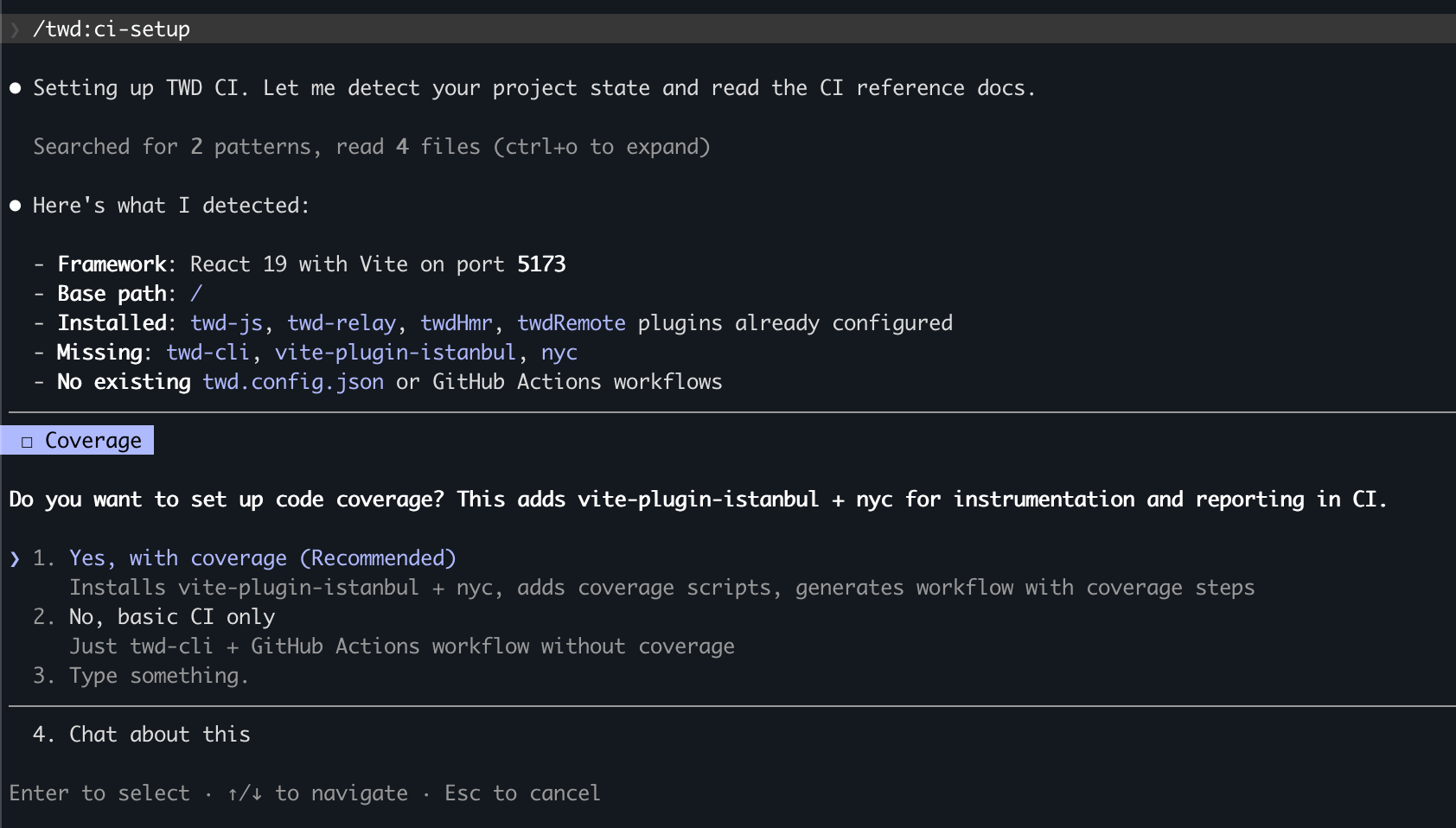
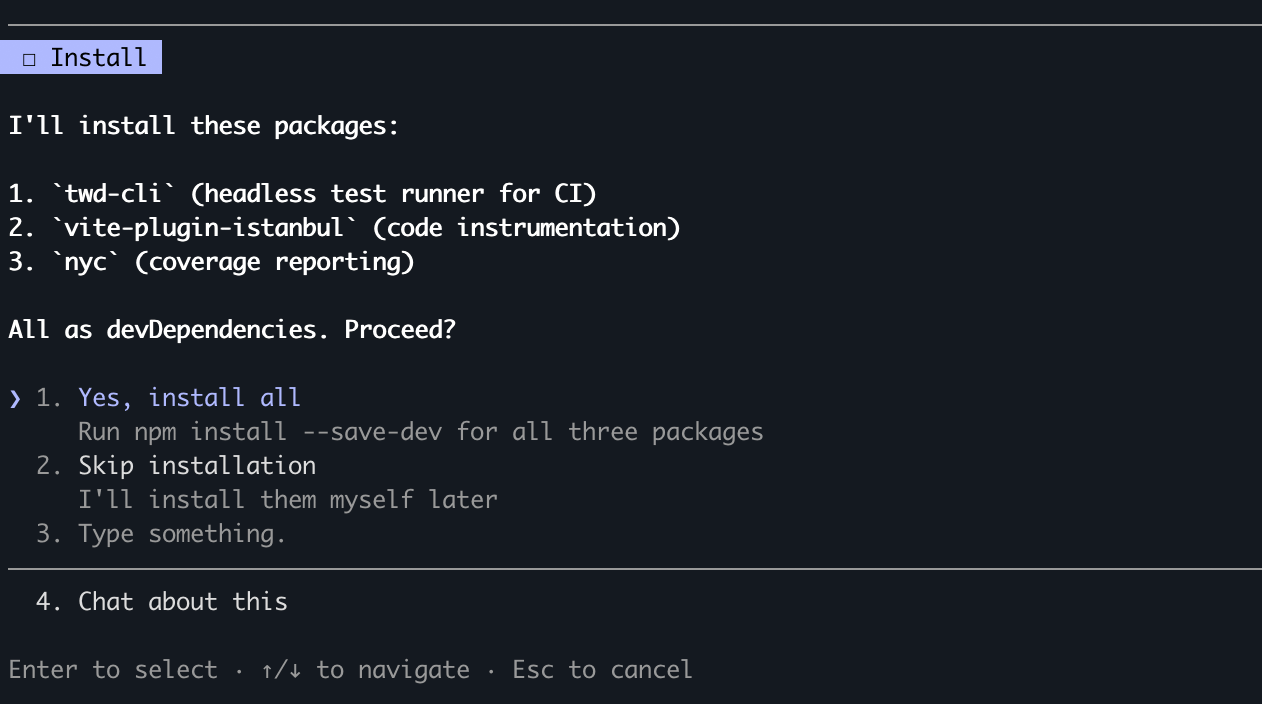
It will ask about the dependencies to install, then generate all CI workflow files for you:
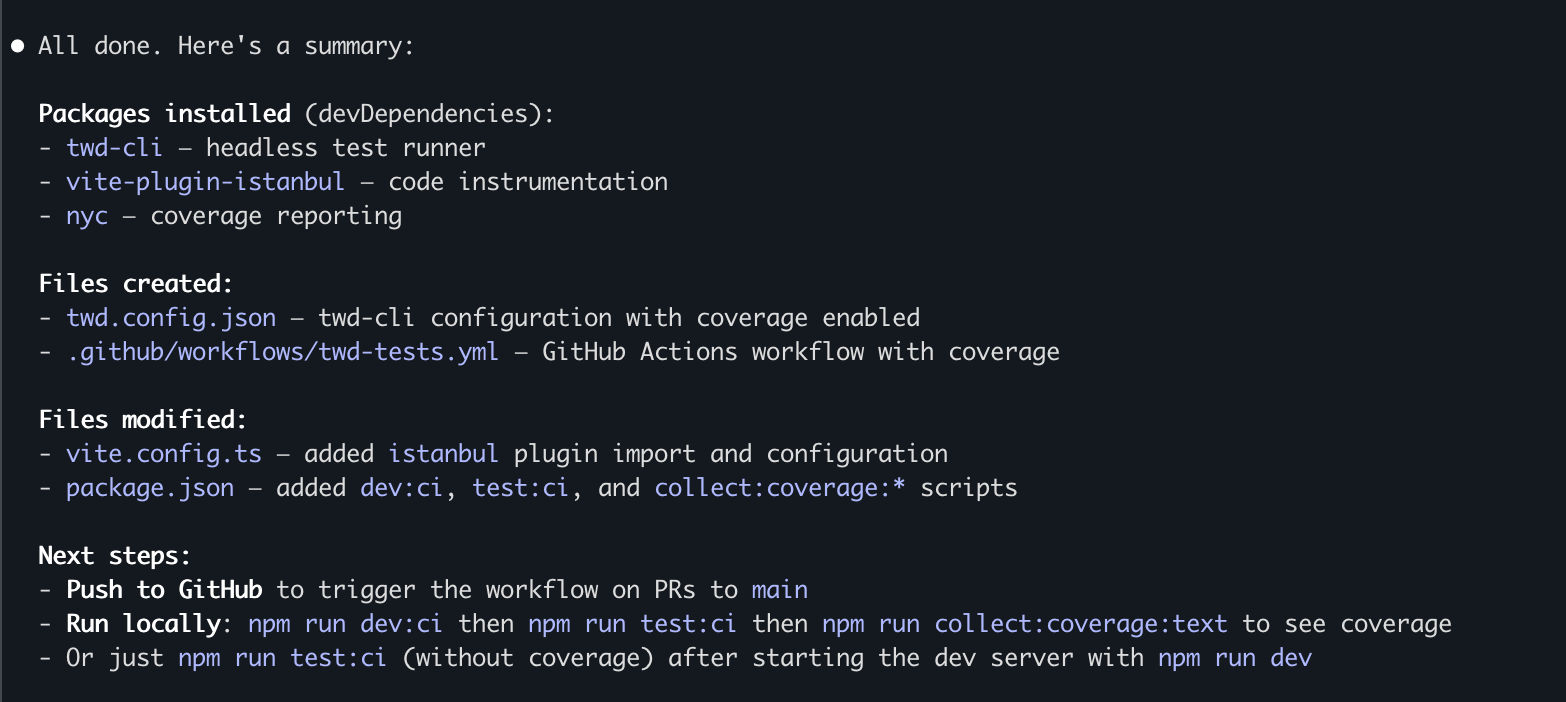
What It Generates
- A GitHub Actions workflow that runs the same
twd-cliyour agent uses locally, so CI and development never disagree about how tests run - Optional coverage collection and reporting
- Optional contract validation of your mocks against your OpenAPI specs, posted as a PR comment
- The environment variables and mock-API steps your app needs to start in CI
- Configuration based on your detected dev server port and base path
It installs twd-cli only if /twd:setup hasn't already, and merges into the twd.config.json setup wrote instead of replacing it.
Recording pull requests
The skill also offers a separate record workflow. Put a record label on a pull request and a job records the tests that branch added or changed — one video per test — then comments the link on the PR.
A diff tells you what the agent thinks it built. A 20-second clip shows what the person using your app will see. The recording comes out of CI, not out of a model, so it costs no tokens and cannot drift from the code: the same run that turned the check green produced the video.
It stays a separate job on purpose, so a recording can never cost you the run that gates the pull request. You need to create a record label in the repository once. How recording works
What's Next
With CI running, you now have a safety net. Next, let's find out what you're missing with test gap analysis.